The Fascinating History of Pointe Shoes: From Soft Leather to Stiff Satin
Pointe shoes are an essential part of ballet, allowing dancers to perform gravity-defying moves and create the illusion of effortless grace. However, the history of pointe shoes is not as glamorous as their appearance on stage. In this blog, we will explore the evolution of pointe shoes, from their early beginnings to the modern-day designs.
The Early Beginnings of Pointe Shoes
The first pointe shoes were created in the early 19th century, and they were nothing like the pointe shoes we know today. They were made of soft leather and had no support, which made it difficult for dancers to balance on their toes. The earliest known depiction of a ballerina en pointe was in a lithograph by Jules Perrot in 1832, where the dancer was wearing soft slippers with ribbons tied around her ankles.
The Evolution of Pointe Shoes
It wasn't until the mid-19th century that pointe shoes began to evolve into the designs we see today. In 1832, Marie Taglioni debuted the first pair of pointe shoes made of satin, which allowed for a more elegant and graceful appearance on stage. However, these shoes still lacked support and were not suitable for more advanced techniques.
In the late 19th century, pointe shoes began to incorporate more support, with the addition of a stiffened sole and a box at the toe. The box was made of layers of fabric and glue, which provided support and protection for the dancer's toes. The shank, which is the part of the shoe that supports the arch of the foot, was also introduced during this time.
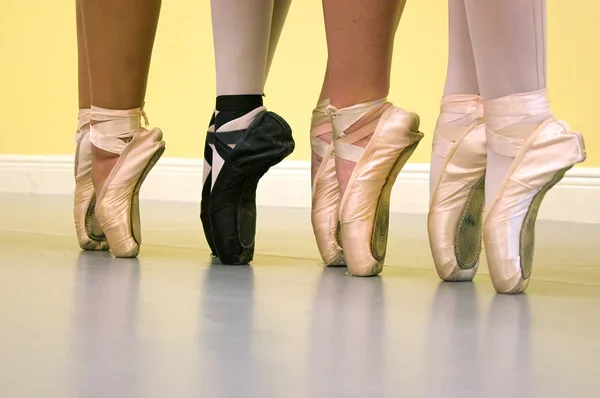
The Impact of Pointe Shoes on Ballet
The introduction of pointe shoes had a significant impact on ballet, allowing dancers to perform more advanced techniques and create the illusion of weightlessness. Pointe work became an essential part of ballet, and many ballets were choreographed specifically for pointe dancers.
The popularity of pointe work also led to the development of new techniques, such as the fouetté and the pirouette en pointe. These techniques required a high level of skill and strength, and pointe shoes provided the necessary support for dancers to perform them.
Modern-Day Pointe Shoes
Today, pointe shoes are made of a combination of materials, including satin, leather, and glue. The toe box, shank, and vamp are all essential parts of the shoe that provide support and stability for the dancer. Pointe shoes are also available in a variety of shapes and sizes to accommodate different foot shapes and sizes.
In recent years, there have been advancements in pointe shoe technology, such as the use of 3D printing to create customized shoes for individual dancers. New materials, such as carbon fiber, are also being used to create stronger and more durable pointe shoes.
The history of pointe shoes is a fascinating one, from the early beginnings of soft leather slippers to the modern-day designs of satin and glue. Pointe shoes have had a significant impact on ballet, allowing dancers to perform more advanced techniques and create the illusion of weightlessness. As technology continues to advance, we can expect to see continued innovation in pointe shoe design, ensuring that dancers can continue to perform at the highest level.


评论
发表评论